
 USD (US$)
 AUD (AU$)
 CAD (CA$)
 EUR (€)
 GBP (£)
 JPY (¥)
The South Korean flag, featuring a unique design, holds deep significance and is central to Korean identity. Overall, this striking, culturally rich flag represents Korea’s history, philosophy, and values. Below, we discuss the story behind the South Korea flag, its meaning, and why it remains a timeless reflection of Korea’s unity and resilience.
The History of the South Korea Flag

The origins of the South Korean flag trace back to the late 19th century during the Joseon dynasty. Throughout the years, the flag, known as Taegeukgi, became a sign of patriotic pride, especially amidst the Japanese occupation leading up to World War II. After Korea was divided in 1948, South Korea officially adopted the Taegeukgi. Simultaneously, North Korea created its own distinct version, making the North and South Korea flags easily recognizable as separate national symbols. Today, the South Korean flag continues to showcase the country’s fascinating heritage and powerful spirit. If you’re based in Seoul, join our DMZ Korea Day Tour from Seoul, offering an epic opportunity to discover this legacy firsthand throughout the DMZ Korea region.
The South Korea Flag Meaning
South Korea’s flag is deeply connected to Confucianism, Taoism, and Buddhism, reflecting South Korea’s worldview of peace. Wondering what the South Korea flag looks like? Its white background represents purity and tranquility, while the red and blue Taeguk circle is derived from Taoist philosophy. In general, this illustrates the concept of opposing forces (yin and yang). Surrounding the circle, four black trigrams (bars) embody various aspects of the universe and Confucian principles, including the four cardinal directions, seasons, and classical elements, such as heaven. Together, these components convey a sense of harmony, balance, and interconnectedness.
Fun Facts About the South Korean Flag

- The flag’s background is white, considered a traditional color in Korea. In fact, Koreans often historically wore white clothing.
- Did you know that the Taegeukgi is so iconic that you can find several South Korea flag coloring pages online?
- Tageuk translates to “supreme ultimate”, signifying the coexistence of opposite yet complementary forces in life.
- Even with just one day in Seoul, admire a spectacular exhibition dedicated to the Taegeukgi at the National Museum of Korean Contemporary History, one of the best things to do in Seoul.
- The South Korea Flag emoji (KR) is a popular way for people to honor and celebrate Korean culture on the internet.
- If you visit South Korea in July, you can also experience Constitution Day, when the country proudly displays the national flag across major cities and hosts riveting patriotic ceremonies.
- Despite political tensions between North and South Korea, the two nations have marched under a unified Korean flag during international sporting events.
Intrigued by these fun facts? Learn even more about Korea’s history by joining our Suwon Half-Day Tour from Seoul, perfect for those based in Seoul. This way, you’ll explore a wealth of fascinating treasures, all in one unforgettable afternoon.
Inspiring Koreans Around the World
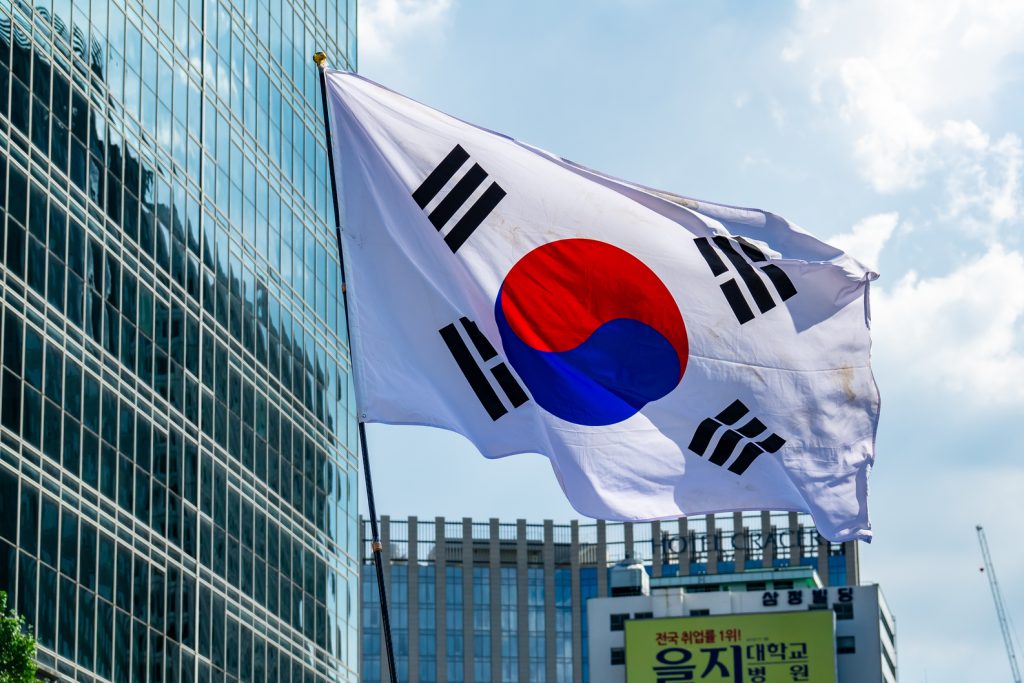
For generations of Koreans, the flag of South Korea has represented the country’s shared values. Its bold red and blue yin-yang, framed by trigrams, captures the ideas of harmony that have shaped Korean society for centuries. Additionally, the flag allows people to express pride and connection to South Korea. In modern times, it continues to resonate with Koreans across the globe, showing how central it is to Korea’s story, identity, and resilient spirit. During Chuseok, “Korean Thanksgiving,” which takes place in South Korea in September and can also fall in South Korea in October, the Taegeukgi is prominently exhibited, symbolizing family, traditions, and national unity-values that inspire Koreans worldwide. While the flag embodies Korea’s timeless heritage, contemporary customs are equally enjoyable. Stop for a cup of Korean coffee in a local cafe to experience modern culture alongside historical pride.
Find Out Firsthand What Makes Korea Unique

The flag South Korea proudly displays highlights just one aspect of the country’s intriguing history. From beautiful shrines in Korea to majestic palaces, Korea is brimming with hidden treasures around every corner. You can explore these fascinating attractions by joining one of our exceptional South Korea tours. Throughout the day, our expert guides will reveal the meaning behind captivating museums, serene temples, bustling markets, and much more. Before you fly, browse our Korea travel resources for helpful insights, allowing you to make the most of your trip.
If you’re visiting for an extended period, our South Korea Package Tours are an ideal option for those eager to experience the country in depth. Available in 6-day, 7-Day, 8-day, 9-day, and 13-day versions, they take you across every gorgeous region in South Korea, complete with guided visits to iconic landmarks, cultural activities, and seamless logistics. We manage all your transfers, comfortable hotels, exciting itineraries, and professional tour guides. With us as your leaders, you’ll enjoy an inspiring, enriching journey embracing the charm of South Korea like never before.


